What “Buy it in ChatGPT” means
Buy it in ChatGPT is OpenAI’s in-chat checkout that lets people buy products directly inside a ChatGPT conversation, starting with U.S. Etsy sellers and with Shopify merchants “coming soon.” It’s called Instant Checkout, and it handles the whole flow see a product, tap Buy, confirm shipping and payment without leaving the chat.
What “Buy it” really is
Think of it like this: ChatGPT already helps you figure out what to buy, and now it can help you actually complete the purchase inside the same chat. The feature is available to U.S. users across Free, Plus, and Pro plans, with Etsy live now and a massive pool of Shopify merchants queued up next.
Here’s the spirit of the feature, in plain English:
- It’s an inline checkout inside ChatGPT for eligible products, not a link-out to some other site.
- Product suggestions are unsponsored and ranked by relevance, so the list isn’t pay-to-play.
- It’s starting with single-item purchases, with multi-item carts planned next.
How it works
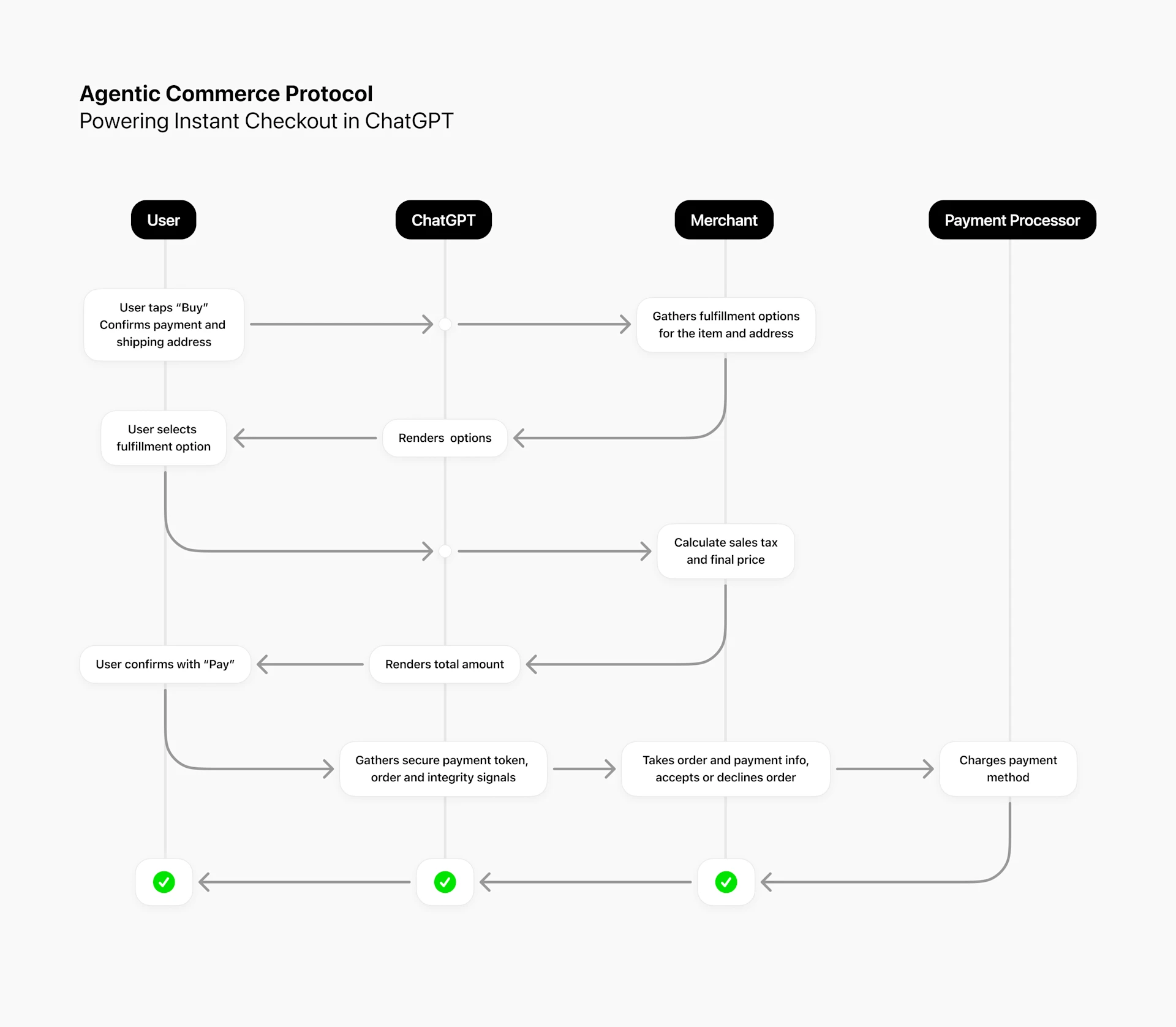
You ask a shopping question the way you’d ask a smart friend: “best running shoes under $100” or “gifts for a ceramics lover.” ChatGPT shows relevant products, and anything you can buy right now in-chat gets a clear Buy button. Tap it, check your order details (address, payment), and you’re done no extra tabs, no hopping around.
A few things worth knowing:
- Stripe powers the checkout flow and payments behind the scenes for Instant Checkout.
- When you buy, Stripe issues a Shared Payment Token (SPT) so ChatGPT can pass payment authorization to the merchant without exposing card details.
- Orders and fulfillment still run through the merchant’s systems; ChatGPT is the assistant, not the warehouse.
Where it’s available (and what’s next)
Right now, it’s for U.S. users, and it works with U.S. Etsy shops to start. OpenAI says Shopify merchants over a million of them are on the way, with broader merchant and regional expansion planned.
Two related notes:
- “Shopping research” is a separate feature that builds guided buyer’s guides and, today, generally links out to retailers; Instant Checkout is the path to full in-chat purchases. OpenAI framed Instant Checkout as part of a broader e-commerce push this year.
Why it matters
It cuts out busywork. Instead of opening tabs, comparing listings, and juggling carts, you can ask a direct question and finish a simple purchase in one place. The unsponsored ranking is a quiet but important promise: suggestions are picked for relevance, not ad dollars.
Some trade-offs to keep in mind:
- It’s perfect for straightforward, one-off buys right now; bundles, customizations, or complicated configurations still need a traditional checkout.
- The assistant narrows options fast, which is nice, but ultra-narrowing can hide happy surprises you might have found while browsing the old-fashioned way.
What merchants should know
If you sell on Etsy, you’re already in the first wave; if you’re on Shopify, you’re next in line as OpenAI expands merchant support. Stripe is the payments backbone, and its SPT flow is designed so your existing systems can process orders while reducing exposure to raw payment credentials.
A few practical merchant takeaways:
- Product discovery happens in natural language; clear titles, clean images, and concise bullets still matter for comprehension and conversion.
- OpenAI says product rankings are organic and relevance-based, so strong product data and honest copy likely help more than splashy gimmicks.
- There’s mention of a small transaction fee on the merchant side and no extra fee for shoppers.
- Start by optimizing for simple, single-SKU purchases while multi-item carts are still on the roadmap.
What it means for brands and merchants
Now the other side of the table: if you run an ecommerce brand, this matters a lot.
“Buy it in ChatGPT” effectively turns ChatGPT into a new sales channel where your product can be discovered and purchased without the shopper ever loading your homepage. It is closer to having a personal shopping assistant that stands between you and the customer, deciding which options get airtime.
Some key realities for merchants:
- You plug in via platforms like Etsy or Shopify and speak to ChatGPT through standards like the Agentic Commerce Protocol.
- You still keep your own stack for inventory, tax, logistics, and returns; ChatGPT just hands over structured order data and a payment token.
- You pay transaction fees, similar in spirit to marketplace or payment platform fees, in exchange for access to this new traffic and conversion channel.
Some ecommerce analysts are already treating this as a serious competitor to the classic “search → marketplace → checkout” flow, especially for impulse or low-consideration items. If shoppers trust ChatGPT’s answers, the “default marketplace” in their head might shift from a big marketplace search box to “just ask the AI and hit Buy.”
For brands, that means:
- Being visible inside AI recommendations becomes just as important as ranking on Google or marketplaces.
- Product feeds, structured data, reviews, and clean content matter more than ever, because that’s what AI systems use to decide what to show.
It’s still early, but the direction of travel is clear: conversational commerce isn’t a side gimmick anymore.
Wrapping it up
So, what is “Buy it in ChatGPT”? It’s the moment where ChatGPT stops being just a place to think about what to buy and quietly becomes a place where you can finish the whole purchase without leaving the conversation.
It’s early. The feature is U.S.-only, single-item, and still evolving, and there are real questions about choice, visibility, and dependency on AI recommendations. But the direction is clear: ecommerce is sliding into chat. Text first. Buy button second.
If you’re curious about it, keep an eye on how often you already ask ChatGPT about products, tools, or gift ideas. Once the Buy button appears in your region, you might find yourself using it without really planning to just because it’s there, it’s fast, and at that moment, it feels like the smoothest path from “I need this” to “order placed.”
Download The Free E-book & Launch Your Brand Strategically
Download The Free E-book & Launch Your Brand Strategically
Frequently Asked Questions
Share this post