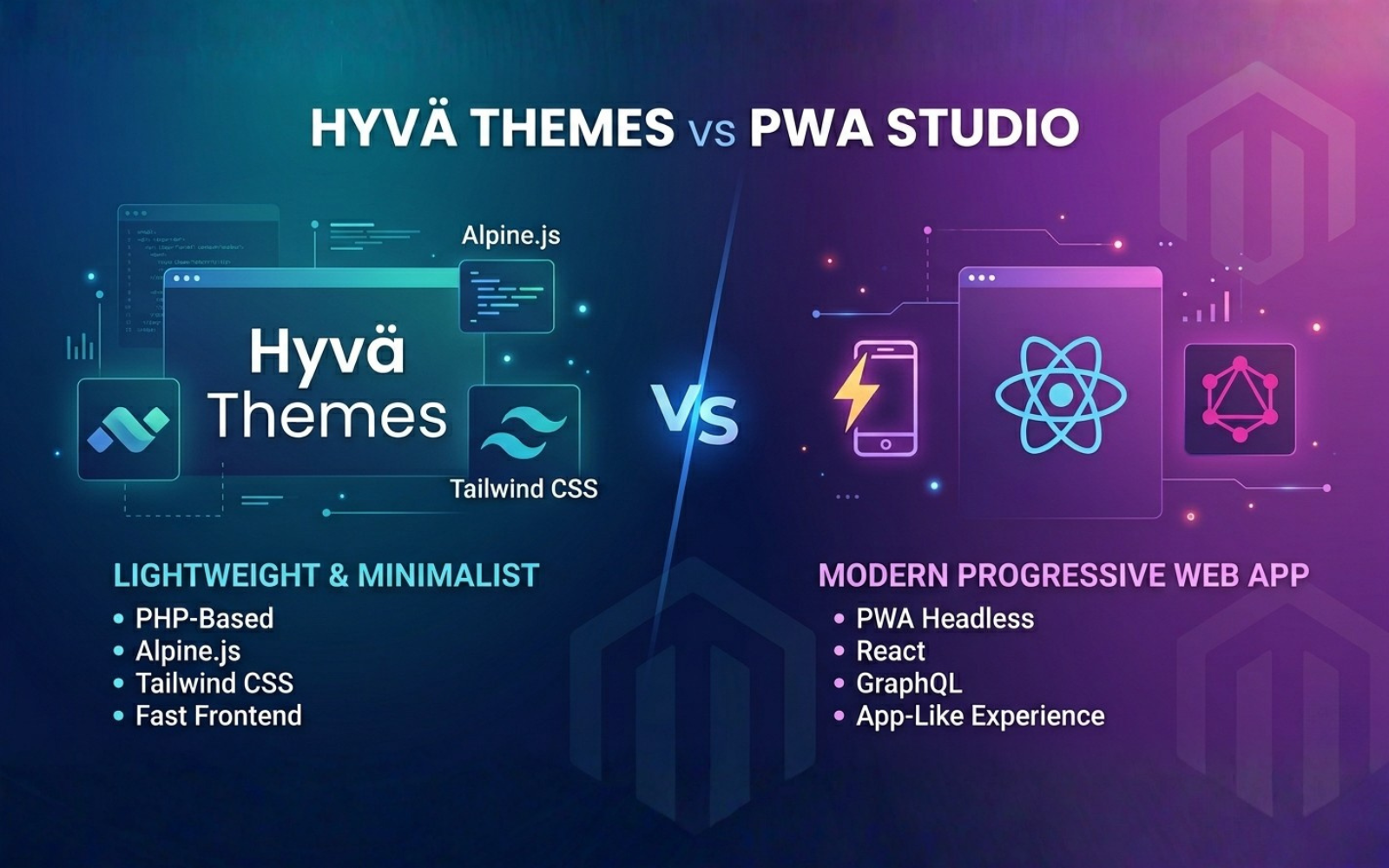
Hyvä vs PWA Studio: Choosing the Right Frontend Solution for Your Magento Store
The evolution of ecommerce has pushed merchants and developers to constantly seek better ways to deliver exceptional online shopping experiences. For Magento 2 stores, the frontend architecture has become a critical decision point that impacts everything from site performance to development costs. Two prominent solutions have emerged as frontrunners in the Magento ecosystem: Hyvä Themes and PWA Studio. Both promise improved performance and better user experiences, but they take fundamentally different approaches to achieving these goals.
Understanding which solution fits your business needs requires a deep dive into their architectures, benefits, limitations, and real-world implications. This comprehensive comparison will help you make an informed decision about which frontend technology deserves your investment.
Understanding the Fundamentals
Before comparing these two solutions, it's essential to understand what each one brings to the table and the philosophies behind their development.
PWA Studio represents Adobe's official answer to modern frontend development for Magento. Released in 2018, it leverages Progressive Web App technology using React as its foundation. The approach separates the frontend from the backend through a headless architecture, communicating via GraphQL APIs. This creates a decoupled system where the presentation layer operates independently from Magento's core functionality.
Hyvä Themes, introduced in 2020, takes a radically different approach. Rather than going headless, Hyvä rebuilds Magento's frontend using modern but lightweight technologies: Alpine.js for JavaScript functionality and Tailwind CSS for styling. It maintains Magento's traditional monolithic architecture while dramatically reducing frontend complexity and bloat.
Architecture and Technical Approach
The architectural differences between these solutions fundamentally shape their capabilities and limitations.
PWA Studio embraces the headless commerce philosophy. The React-based frontend runs as a separate application, making API calls to Magento's backend. This separation allows for tremendous flexibility in how you present content and structure user interactions. Developers can build custom storefronts that bear no resemblance to traditional Magento layouts, potentially integrating content from multiple sources beyond Magento itself.
However, this flexibility comes with complexity. PWA Studio requires developers to essentially build two applications: the backend Magento installation and the frontend React application. Every feature must be connected through GraphQL queries and mutations, which means custom modules require both backend and frontend development work.
Hyvä maintains the traditional Magento architecture where frontend and backend remain connected. Templates use familiar PHP and PHTML files that Magento developers have worked with for years. The difference lies in what Hyvä removes and replaces. Gone are the heavy JavaScript frameworks like Knockout.js and RequireJS that slow down traditional Magento storefronts. In their place, Alpine.js provides reactive functionality with a fraction of the JavaScript payload.
This approach means Hyvä works more like an enhanced version of traditional Magento development rather than a complete paradigm shift. Developers familiar with Magento can become productive with Hyvä much more quickly than with PWA Studio.
Performance Characteristics
Performance stands as one of the primary motivations for choosing either solution, but they achieve speed through different mechanisms.
PWA Studio delivers excellent performance through its headless architecture and React's efficient rendering. The decoupled frontend can be hosted on specialized infrastructure optimized for serving static assets and JavaScript applications. Progressive Web App features like service workers enable offline functionality and sophisticated caching strategies. When properly implemented and optimized, PWA Studio stores achieve excellent Core Web Vitals scores and fast page load times.
The challenge with PWA Studio performance lies in the implementation complexity. Out of the box, a basic PWA Studio installation performs well, but maintaining that performance as you add custom features requires careful attention to code splitting, lazy loading, and bundle size management. The initial JavaScript bundle can become substantial, potentially impacting time to interactive metrics if not properly optimized.
Hyvä achieves remarkable performance through aggressive simplification. By replacing Magento's default frontend stack with minimal dependencies, Hyvä dramatically reduces the amount of JavaScript and CSS that browsers need to download and parse. Real-world implementations routinely achieve Google PageSpeed scores in the 90s, sometimes reaching perfect 100 scores for both mobile and desktop.
The secret to Hyvä's performance success lies in what it doesn't include. Traditional Magento 2 ships with hundreds of kilobytes of JavaScript and CSS. Hyvä reduces this to tens of kilobytes. Alpine.js weighs approximately 15KB compared to the much larger frameworks it replaces. Tailwind CSS, when purged of unused styles, produces minimal CSS files. This lightweight approach means browsers spend less time downloading, parsing, and executing code, resulting in faster page loads and better user experiences.
Development Experience and Learning Curve
The developer experience differs significantly between these platforms, impacting both initial development timelines and long-term maintenance.
For teams with React expertise, PWA Studio offers a familiar development environment. Modern JavaScript developers comfortable with React, GraphQL, and contemporary frontend tooling can leverage their existing skills. The component-based architecture promotes reusability, and the separation of concerns between frontend and backend can lead to cleaner code organization in experienced hands.
However, traditional Magento developers face a steep learning curve with PWA Studio. They must learn React's component lifecycle, hooks, and state management patterns. They need to understand GraphQL for data fetching rather than directly accessing PHP objects. The build tools, development workflows, and debugging processes all differ from traditional Magento development. This learning curve translates to longer development timelines and higher costs, especially for agencies or merchants without existing React expertise.
Hyvä presents a much gentler learning curve for Magento developers. The template structure remains familiar, using PHTML files and PHP logic that experienced Magento developers already understand. Learning Alpine.js requires minimal time investment compared to mastering React. Most developers become productive with Alpine.js within days. Tailwind CSS operates through utility classes that are straightforward to understand and apply.
This accessibility means agencies can train their existing Magento teams on Hyvä relatively quickly, reducing the need for specialized hires or complete team restructuring. Development velocity often increases compared to traditional Magento development because the simplified stack has fewer layers to navigate and debug.
Extension Compatibility and Ecosystem
Extension compatibility represents a critical consideration for most Magento merchants who rely on third-party modules for essential functionality.
PWA Studio faces significant challenges in this area. Because it operates as a headless solution, traditional Magento extensions that include frontend components don't work out of the box. Each extension requires custom frontend development to connect its backend functionality to the PWA Studio interface. For stores using dozens of extensions, this represents substantial additional development work.
Some extension vendors have begun providing PWA Studio compatibility for their most popular modules, but coverage remains limited compared to the vast Magento Marketplace. This gap often forces merchants to choose between going headless and maintaining certain functionality, or invest heavily in custom development to recreate extension features in the PWA frontend.
Hyvä also faces extension compatibility challenges, but of a different nature. Because Hyvä replaces Magento's frontend stack, extensions that rely on specific JavaScript frameworks or CSS structures may need adaptation. However, the work required is typically less extensive than with PWA Studio because the underlying architecture remains consistent with traditional Magento.
Recognizing this challenge, the Hyvä community has created the Hyvä Compatibility Modules repository. This community-driven initiative provides compatibility modules for popular extensions, created by both Hyvä developers and the community. The list of compatible extensions grows continuously, with hundreds of modules already supported. When compatibility modules don't exist, adapting extensions for Hyvä typically requires frontend template work rather than complete feature rebuilds.
Customization Flexibility
Both solutions offer extensive customization capabilities, but they provide different types of flexibility.
PWA Studio excels when you need to create completely custom user experiences that break from traditional ecommerce patterns. The headless architecture allows you to pull content from multiple sources, create unique navigation patterns, or integrate shopping functionality into broader digital experiences. For brands requiring cutting-edge, highly differentiated storefronts, PWA Studio's flexibility is unmatched.
This flexibility requires significant investment to realize. Custom features demand both backend API development and frontend implementation. Simple customizations can become complex projects when they require new GraphQL schemas, resolvers, and React components.
Hyvä provides flexibility within the context of Magento's established patterns. You can customize layouts, create unique design systems using Tailwind's utility-first approach, and build interactive features with Alpine.js. For most ecommerce use cases, Hyvä provides sufficient flexibility to create distinctive brand experiences without the complexity of headless architecture.
The advantage here is efficiency. Customizations that might take weeks in PWA Studio can often be accomplished in days with Hyvä because you're working within Magento's established framework rather than building connections between separate systems.
Cost Considerations
Budget realities often drive technology decisions, making cost comparison essential.
PWA Studio itself is free and open-source, but the total cost of ownership extends far beyond licensing. Development costs typically run significantly higher due to the specialized skills required and longer development timelines. Agencies with React expertise command premium rates, and projects frequently exceed initial estimates as teams encounter the complexities of headless implementation.
Hosting costs may also increase. While the decoupled architecture allows for optimized infrastructure, you're essentially running two applications instead of one, potentially requiring additional servers or services. GraphQL query optimization and caching strategies require ongoing attention to maintain performance and control server costs.
Hyvä requires a commercial license, with pricing based on store size and number of installations. While this represents an upfront cost, the total cost of ownership often proves lower than PWA Studio. Development costs decrease due to faster development velocity and the ability to leverage existing Magento development teams. The simplified stack also reduces hosting requirements compared to traditional Magento, sometimes offsetting the license cost through lower infrastructure expenses.
Maintenance costs favor Hyvä as well. The simpler architecture means fewer potential points of failure and easier troubleshooting. Updates and ongoing development work require less specialized expertise, reducing long-term expenses.
Mobile Experience and Progressive Features
Mobile commerce continues growing, making mobile optimization crucial for ecommerce success.
PWA Studio was built specifically to deliver Progressive Web App experiences. Features like add-to-home-screen functionality, push notifications, and offline browsing capabilities are core to its design. For businesses prioritizing mobile engagement and app-like experiences without building native applications, PWA Studio delivers these capabilities naturally.
The PWA features require careful implementation to realize their full potential. Service worker configuration, cache management, and offline functionality need thoughtful design to provide value without causing issues like stale content or excessive storage usage.
Hyvä focuses on delivering excellent mobile web experiences through performance optimization and responsive design. While it doesn't inherently provide PWA features like service workers or push notifications, the exceptional loading speeds and clean responsive layouts create excellent mobile experiences. Additional PWA features can be implemented if needed, though they're not built into the core offering.
For many merchants, Hyvä's approach proves sufficient. Fast-loading, responsive sites often outperform feature-rich but slower alternatives in conversion rates. The simplicity of delivering these experiences through Hyvä's lightweight stack appeals to teams prioritizing results over technological sophistication.
Making the Right Choice
Choosing between Hyvä and PWA Studio depends on your specific circumstances, priorities, and resources.
PWA Studio makes sense when you need complete design freedom to create highly custom experiences, when you're building omnichannel experiences that integrate Magento with other platforms, when your team already possesses strong React and GraphQL expertise, or when you require specific PWA features for your mobile strategy. Organizations with larger budgets and longer timelines for complex digital experiences find value in PWA Studio's capabilities.
Hyvä represents the better choice when you want to maintain faster time-to-market with predictable development timelines, when your team consists primarily of traditional Magento developers, when budget constraints require cost-effective solutions, or when you rely heavily on third-party extensions. Merchants seeking dramatic performance improvements without architectural complexity consistently find success with Hyvä.
The decision ultimately balances ambition against pragmatism. PWA Studio offers greater theoretical flexibility but demands significant investment and expertise to realize its potential. Hyvä delivers immediate, substantial improvements through simplification and optimization while working within Magento's established framework.
Conclusion
Both Hyvä Themes and PWA Studio represent valid approaches to modernizing Magento storefronts, but they serve different needs and audiences. PWA Studio pushes the boundaries of what's possible with headless architecture, offering maximum flexibility for organizations with the resources to leverage it. Hyvä achieves remarkable results through elegant simplification, making advanced performance accessible to a broader range of merchants and developers.
The Magento ecosystem benefits from having both options available. Complex enterprise implementations with unique requirements might justify PWA Studio's complexity, while the majority of Magento stores can achieve their performance and user experience goals more efficiently with Hyvä. Understanding your specific requirements, available resources, and long-term maintenance capabilities will guide you toward the solution that best serves your ecommerce success.
Categories
Download The Free E-book & Launch Your Brand Strategically

Download The Free E-book & Launch Your Brand Strategically
Share this post